


TOWARDS NET ZERO
COMPETITION
EMPOWERING THE NEXT GENERATION
OF SUSTAINABILITY LEADERS
The Towards Net Zero Competition is designed to identify and support emerging Sustainability Professionals who are passionate about sustainability, energy efficiency, and decarbonisation of the built environment. It will provide an opportunity for young professionals to demonstrate their technical capability, creativity, and practical understanding of pathways toward Net Zero buildings and communities.
A $150 fee is payable to register. By registering you accept the rules of the competition
the aim
The built environment is one of the largest contributors to greenhouse gas emissions globally. Achieving Net Zero will require a new generation of professionals capable of combining technical expertise with practical and innovative thinking.
The Towards Net Zero Competition aims to inspire, encourage, and showcase future leaders who are committed to creating more sustainable, energy-efficient, and climate-resilient buildings and communities.
The competition aims to create awareness of:
- Root cause of climate change and its impact
- Built Environment’s contribution to greenhouse gas emissions (GHG)
- Role of Heating Ventilation & Air Conditioning (HVAC) in Climate Change
- Fossil-fuelled based energy and GHG emissions
- Energy conservation measures to reduce GHG emissions.
- Achieving Net Zero Homes and Buildings
THE AWARD
The winner will be presented the inaugural David Norman Sustainability Award and a cash prize of AUD $10,000.
The prize is generously donated by Norman Family Foundation in the memory of late David Norman, a brilliant engineer, who was instrumental in founding and promoting Consulting Engineers, specialising in Building Services.
Ten finalists will also receive complimentary AIRAH Membership plus industry recognition and networking opportunities with sustainability leaders and professionals.
Register for the competition
the details
Eligibility
Any young professional who was under 35 years on or before the 1 July 2026. This competition is not restricted to engineers and is open to anyone working or interested in the heating, ventilation, air conditioning, refrigeration (HVAC&R), built environment or related industries who is passionate about sustainability and achieving net zero outcomes.
Entry fee
A $150 fee is payable to enter the competition. Payment is required before the Assignment 1 submission deadline – 23rd September 2026 – 5pm. Payment is made through our online payment page here.
Competition Rules
Terms and Conditions of the Competition
Key dates
Registration close
7th September 2026 – 5pm
Assignment 1 submission deadline
23rd September 2026 – 5pm
Announcement of 10 finalists & issue of assignment 2
7th October 2026
Assignment 2 submission deadline
7th November 2026 – 5pm
Announcement of top 5 finalists
16th November 2026
Interviews with the top 5 finalists
19th November 2026
Announcing the winner at the AIRAH National Awards Night – Book your tickets now
26th November 2026
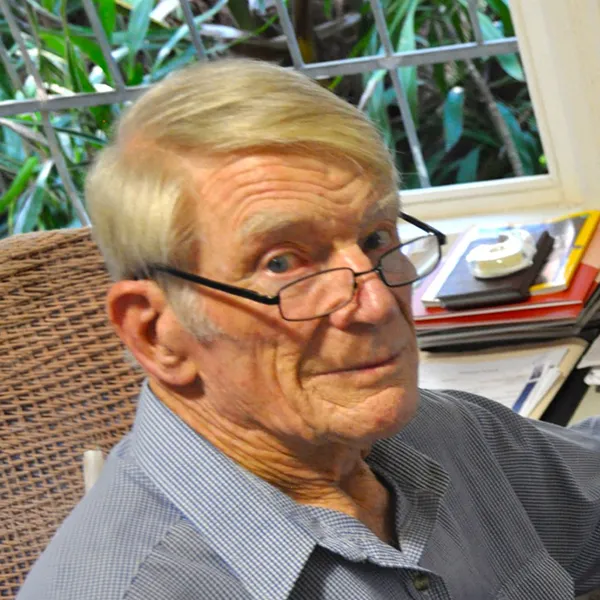
About David Norman
David Norman (1930–2020) – a farmer, an engineer, an entrepreneur, a philanthropist, an environmentalist and equally importantly a decent gentleman was one of Australia’s true engineering pioneers. He combined technical excellence, entrepreneurial vision, and an unwavering commitment to innovation to help shape the modern building services industry.
The competition reflects David’s lifelong belief that the future of our industry depends on encouraging bold thinking, practical innovation, and the next generation of professionals to tackle society’s greatest challenges.
COMPETITION
STRUCTURE
ASSIGNMENT 1
Written submission
Upon registration, the participant will be provided with Assignment 1.
The key objective is to assess each participant’s understanding of the fundamental principles of climate change, greenhouse gas (GHG) emissions, the role of the built environment, and the application of building services engineering in achieving Net Zero outcomes.
Each registered participant will be required to submit a written paper addressing a series of questions issued by the Competition Organising Committee.
The written submission will address topics including, but not be limited to:
- The root causes of climate change and the scientific basis of global warming.
- Greenhouse gases and their contribution to climate change.
- The contribution of the built environment to global and Australian greenhouse gas emissions.
- The role of building services engineering, including HVAC&R systems, lighting, electrical services, building controls, renewable energy systems and water systems, in reducing energy consumption and greenhouse gas emissions.
- Practical engineering strategies and technologies for achieving low-energy, low-carbon and Net Zero buildings.
- The importance of occupant behavior, commissioning, monitoring, and ongoing building optimisation in achieving sustainable building performance.
Experience Statement
Each participant shall also submit a summary of their experience in undertaking building performance analysis using recognised energy simulation and thermal modelling software.
The Experience Statement should include:
- Building energy simulation and thermal modelling software used (for example, IES VE, EnergyPlus, DesignBuilder, eQUEST, TRACE 3D Plus, Carrier HAP, TAS, or equivalent).
- The participant’s role in simulation or modelling projects.
- Examples of “what-if” evaluations undertaken to assess the impact of energy conservation measures or design alternatives.
- Experience in assessing building envelope performance, glazing systems, HVAC systems, renewable energy integration, indoor environmental quality, thermal comfort, and greenhouse gas reduction strategies.
- Any relevant publications, research projects, awards, or technical presentations related to sustainable buildings or Net Zero design.
The Stage 1 submissions will be independently assessed by the Judging Panel against published evaluation criteria. Based on these assessments, the highest-ranked participants will be invited to compete in Stage 2, where they will undertake a practical building energy simulation and thermal modelling challenge.
ASSIGNMENT 2
Peforming a modelling exercise
Stage 2 will require performing a modelling exercise using energy simulation software on ONE of the two scenarios:
- Scenario 1 – involving a residential building, or
- Scenario 2 – involving a commercial building
More information will be made available to the 10 finalists at the time.
Judges
Dr Matthew Dunn
University of Sydney

Noni Nuriani
The International Building Performance Simulation Association – IBPSA- Australasia

Dr Ashak Nathwani AM
Norman Family Foundation